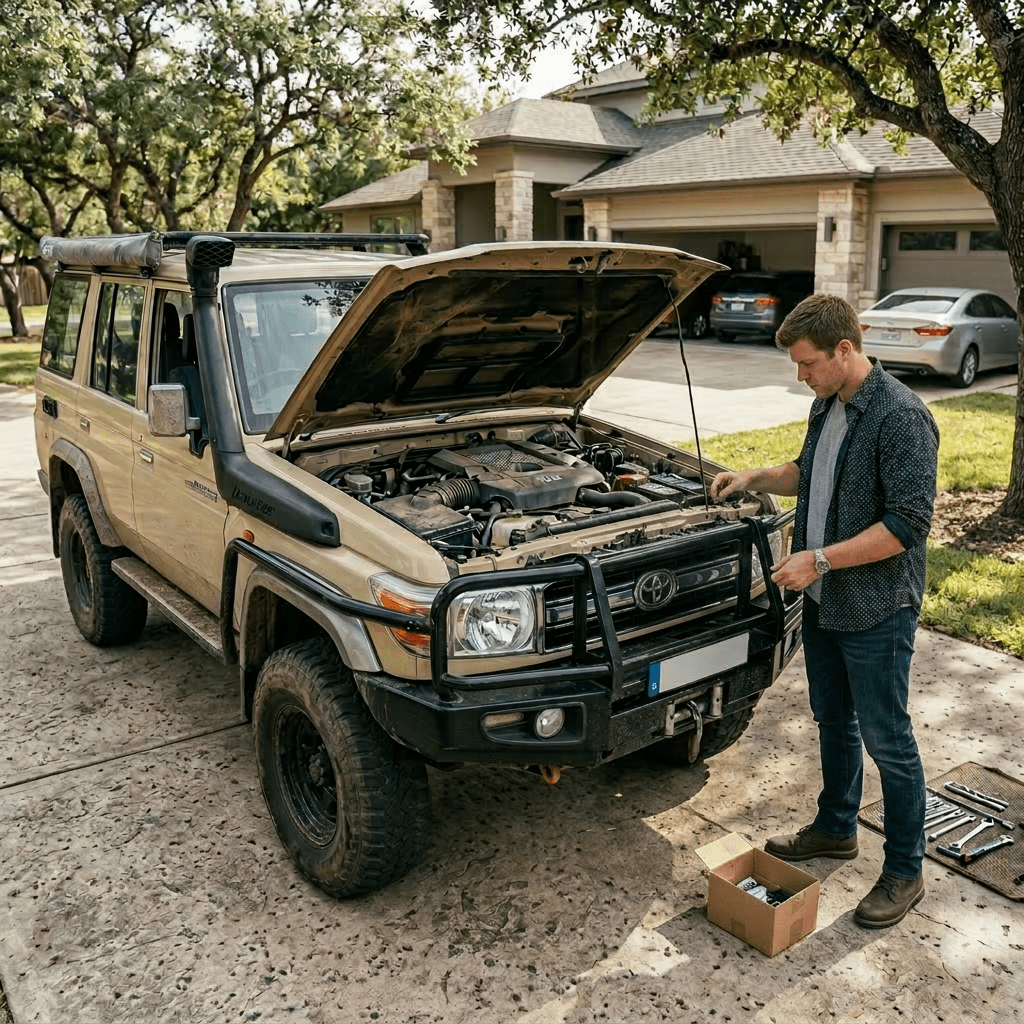
Vehicle Prep: What to Check Before You Leave the Driveway
Most vehicle problems on the trail aren’t dramatic breakdowns — they’re small things that were ignorable on pavement and become a real problem forty miles from the nearest tow truck. A five-minute check before you leave home solves most of what would otherwise ruin a trip.
Here’s what actually matters before you point your rig down a dirt road.
Fluids and the Basics
Check and Top Off Fluids
Oil, coolant, brake fluid, transmission fluid, differential fluid — a quick look at all of them before a trip catches slow leaks and low levels before they become a stranded-vehicle problem. This takes ten minutes and costs nothing if everything’s fine.
Tire Tread, Pressure, and Spare Condition
Check tread depth, look for sidewall damage, and confirm your pressures match what the trip calls for (lower for sand or soft terrain, standard for maintained roads). Then actually check your spare — a flat spare is a surprisingly common way a manageable situation turns into a stuck one.
The Kit That Handles Small Problems Before They Become Big Ones
A Portable Air Compressor
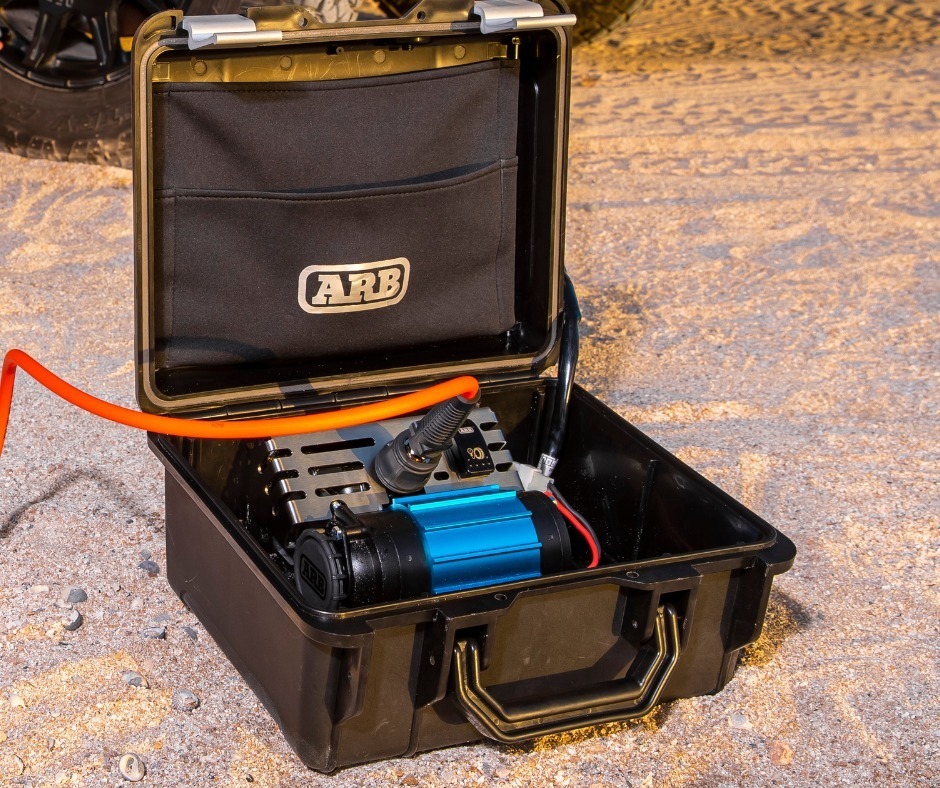
Airing down for soft terrain and airing back up before the highway home is standard overlanding practice, and it also means you’re covered if a tire loses pressure on the trail. The ARB CKMP12V2 Portable Air Compressor is a well-regarded pick for handling that.
A Basic Tool Kit
You don’t need a full mechanic’s bench, but a solid set of sockets, wrenches, screwdrivers, and pliers covers the vast majority of small on-trail fixes — a loose bolt, a squeaky bracket, a DIY fix that gets you home instead of waiting for a tow. The CRAFTSMAN 102-Piece Tool Kit is a solid, affordable all-rounder built for exactly this kind of general-purpose use.
Duct Tape, Zip Ties, and Electrical Tape
Unglamorous, but they’ve fixed more overlanding problems than most dedicated tools. A cracked bracket, a loose hose, a broken clip — this trio holds things together long enough to get home or to a shop. Keep a roll of each in your kit permanently.
Spare Fuses and a Jump Pack
A blown fuse can take out your lights, fridge, or accessories with no warning — a small pack of spares costs almost nothing and can save the trip. Pair it with a jump starter so a dead battery (common after a weekend of running a fridge or lights) doesn’t strand you. The NOCO Boost GB70 handles most SUV and truck engines and doubles as a power bank and flashlight.
The One Thing Worth Repeating
Check this stuff before you leave, not after something goes wrong on the trail. Every item on this list is either free to check or inexpensive to carry, and every one of them turns a potential multi-hour delay into a five-minute fix.
Building the Kit in Order
- Fluid check (free — just do it)
- Tire tread, pressure, and spare check (free — just do it)
- Portable air compressor
- Basic tool kit
- Duct tape / zip ties / electrical tape
- Spare fuses + jump starter
Two of the six items on this list cost nothing but ten minutes of your time. Start there, and build out the kit as your budget allows.
Grab the full packing rundown — recovery gear, camp setup, navigation, and vehicle prep all in one printable — with our free Beginner Overland Rig Checklist.

 Dirt Road Camp
Leave a comment