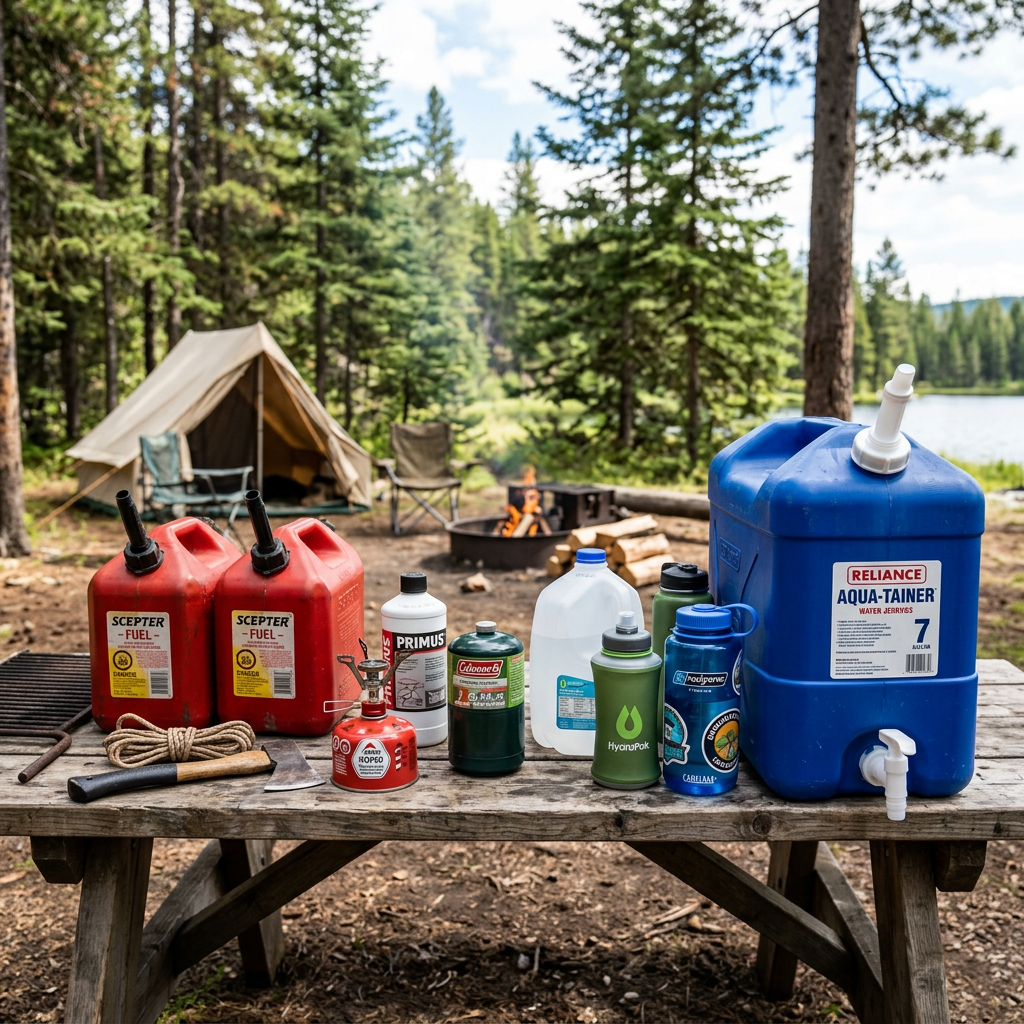
Water & Fuel Storage for Offroad Camping: A Practical Guide for Beginners
Carry what you need. Store it safely. Travel with confidence.
When planning a 4×4 camping trip, most people focus on tents, recovery gear, and cooking equipment.
But two of the most important supplies are often overlooked:
Water and fuel.
Without enough drinking water or fuel, even a short weekend trip can quickly become stressful.
The good news is that building a safe and reliable water and fuel system is simple when you follow a few basic principles.
Why Water Planning Matters
Water isn’t just for drinking.
You’ll also need it for:
- Cooking
- Making coffee
- Washing dishes
- Basic hygiene
- Cleaning equipment
- Emergency situations
Many first-time campers underestimate how much water they actually use.
A simple rule is:
Carry more water than you think you’ll need.
How Much Water Should You Bring?
As a general guide:
Drinking
Allow 2–3 litres per person, per day.
Cooking
Add approximately 1 litre per person, per day.
Washing
Plan for another 2–5 litres, depending on your trip.
Example
Two people camping for two days:
- Drinking: 12 litres
- Cooking: 4 litres
- Washing: 8 litres
Recommended total: 24–30 litres
Having a reserve is always better than running short.
Water Storage Options
Water Jerry Cans
One of the most popular options.
Benefits:
✔ Durable
✔ Easy to transport
✔ Stack neatly
✔ Available in multiple sizes
Look for food-grade, BPA-free containers specifically — not every jerry can on the market is rated for drinking water. The Scepter 5 Gallon Water Can is a solid, budget-friendly pick: military-spec HDPE construction, no plastic taste or odor transfer, and it’s the same style can most overlanders standardize on.
Water Containers with Taps
Ideal for camp kitchens.
Advantages:
- Easy to pour
- Great for washing dishes
- Convenient for cooking
Collapsible Water Bags
Excellent as backup storage.
They pack flat when empty and take up very little room.
The Reliance Products Fold-A-Carrier 5 Gallon is the classic budget option here — food-grade polyethylene, an integrated leak-proof spigot, and it folds down to almost nothing when you don’t need the extra capacity.
Water Filtration Systems
Even with careful planning, situations come up where you need to treat water from an uncertain source — a tap of unknown quality, a stream, a delay that eats into your reserve. A compact filter closes that gap without adding much weight or bulk. The Sawyer Squeeze Water Filtration System is a well-regarded, inexpensive option that removes bacteria and protozoa and packs down to almost nothing — good backup for any beginner kit.
Portable Water Pumps
Lifting and pouring a full 20-litre jerry can gets old fast, especially at the end of a trip. A small 12V pump lets you transfer water from a jerry can to a kettle, basin, or second container without wrestling the whole can around. The BAZPO 12V Submersible Water Pump runs off a car battery or portable power station and is a genuinely convenient upgrade once you’re tired of pouring by hand.
Keep Drinking Water Separate
A simple habit makes camp life easier:
Use one container for:
✅ Drinking water
Another for:
✅ Washing and cleaning
This helps keep your drinking supply clean and prevents unnecessary waste.
Store Water Securely
Water is heavy.
One litre weighs approximately one kilogram.
A 20-litre container weighs around 20 kg.
Always:
- Secure containers with straps
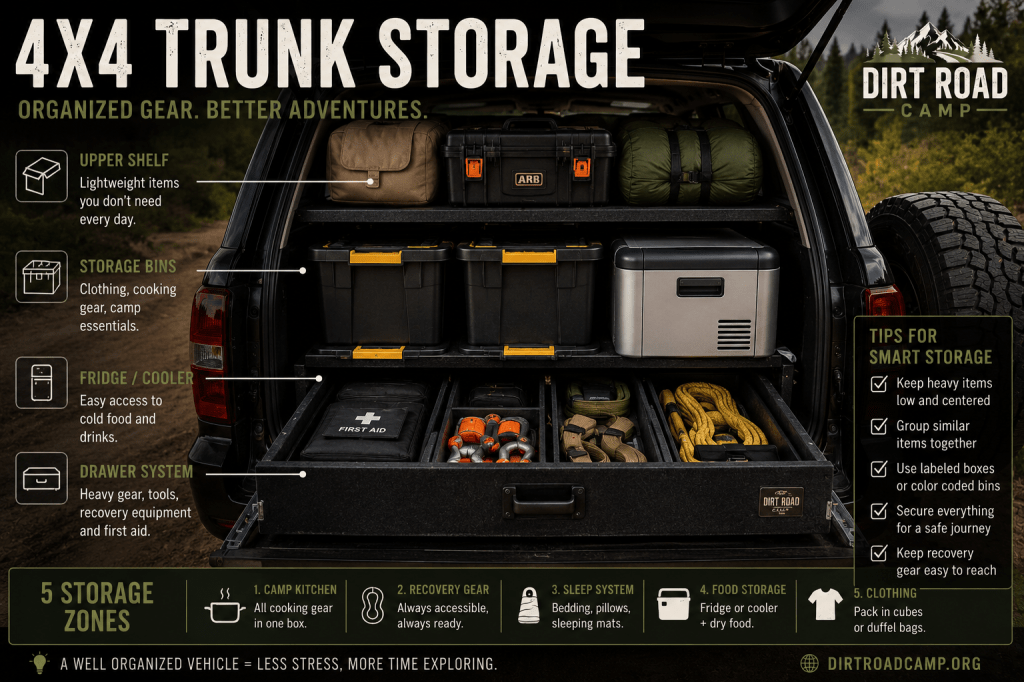
- Store them low in the vehicle
- Prevent movement on rough tracks
A simple water level indicator takes the guesswork out of how much you have left without needing to lift or open every container to check. The Topargee Surface Mount Water Tank Gauge requires no drilling and works well for tracking usage on the go.
Fuel Storage Basics
Fuel deserves just as much planning.
Whether you’re carrying petrol or diesel for your vehicle or gas for your camp stove, proper storage is essential.
Vehicle Fuel
If travelling long distances or into remote areas, consider carrying an approved fuel container.
Benefits:
- Extra range
- Greater flexibility
- Peace of mind
Only use containers designed for fuel storage.
Never use ordinary plastic containers.
The Scepter FSCG552 5 Gallon Fuel Container is EPA/CARB compliant, has a spill-proof controllable-flow spout, and is one of the most widely used approved fuel cans on the market — a safe, no-fuss default.
Camp Stove Fuel
Most portable stoves use:
- Butane canisters
- Propane bottles
- LPG cylinders
Always:
✔ Transport upright when possible
✔ Check for leaks
✔ Keep away from heat
✔ Store in a ventilated area
For a beginner setup, the Coleman Classic 1-Burner Butane Stove is an affordable, reliable starting point, paired with Coleman 16 oz Propane Cylinders if your setup runs on propane instead of butane.
Where Should Fuel Be Stored?
Fuel should never be carried inside the passenger cabin unless absolutely necessary and only in approved containers.
The safest locations include:
- External jerry can holders
- Rear cargo area (secured and well ventilated where practical)
- Roof racks (for approved containers, while considering vehicle weight limits)
Follow local regulations and manufacturer recommendations for transporting fuel.
A dedicated jerry can holder keeps fuel secured and off the interior floor entirely. The SPARKWHIZ Heavy-Duty Jerry Can Holder mounts to most roof racks, crossbars, or truck beds and keeps a can from shifting or rattling on rough tracks.
Never Store These Together
Avoid packing fuel alongside:
- Food
- Drinking water
- Cooking utensils
- Sleeping gear
Separate storage reduces the risk of contamination.
My Recommended Water & Fuel Setup
For a typical weekend trip:
Water
☐ 20L drinking water container
☐ 10L utility water container
☐ Reusable water bottles
Fuel
☐ Full vehicle fuel tank
☐ Camp stove fuel
☐ Approved spare fuel container (only if required for your route)
Water Conservation Tips
Use a spray bottle for washing dishes.
Turn taps off while brushing teeth.
Cook one-pot meals to reduce washing up.
Collect rinse water where appropriate.
Small habits can make your water supply last much longer.
Common Mistakes
Carrying Too Little Water
Always pack extra.
Unexpected delays happen.
Using Poor Quality Containers
Cheap containers often leak.
Invest in food-grade water containers from reputable manufacturers.
Forgetting Fuel for the Stove
Check fuel levels before every trip.
Carry a spare canister if you’re travelling for more than a night or two.
Poor Weight Distribution
Remember:
Water and fuel are heavy.
Store them low and close to the centre of the vehicle for better handling.
Beginner Water & Fuel Checklist
Water
☐ Drinking water
☐ Utility water
☐ Water bottles
☐ Cleaning cloth
☐ Biodegradable soap
Fuel
☐ Vehicle fuel
☐ Stove fuel
☐ Spare fuel (if required)
☐ Funnel and spout — a proper Scepter Military Water Can Spout makes pouring cleaner and faster than trying to tip a full jerry can by hand
☐ Gloves
Related Articles
Build the rest of your camping system with these guides:
- The Ultimate Beginner 4×4 Camping Setup
- Smart 4×4 Storage Systems
- Power Systems for 4×4 Camping
- How I’d Build a Practical Camp Kitchen
- 21 Overlanding Accessories Worth Packing
Final Thoughts
A successful camping trip isn’t about carrying the most gear.
It’s about carrying the right essentials.
Reliable water storage and sensible fuel planning give you the confidence to travel farther, stay longer, and enjoy the journey without unnecessary stress.
Plan ahead.
Pack smart.
Stay prepared.
— Dirt Road Camp
Explore farther. Camp smarter.

 Dirt Road Camp
Leave a comment