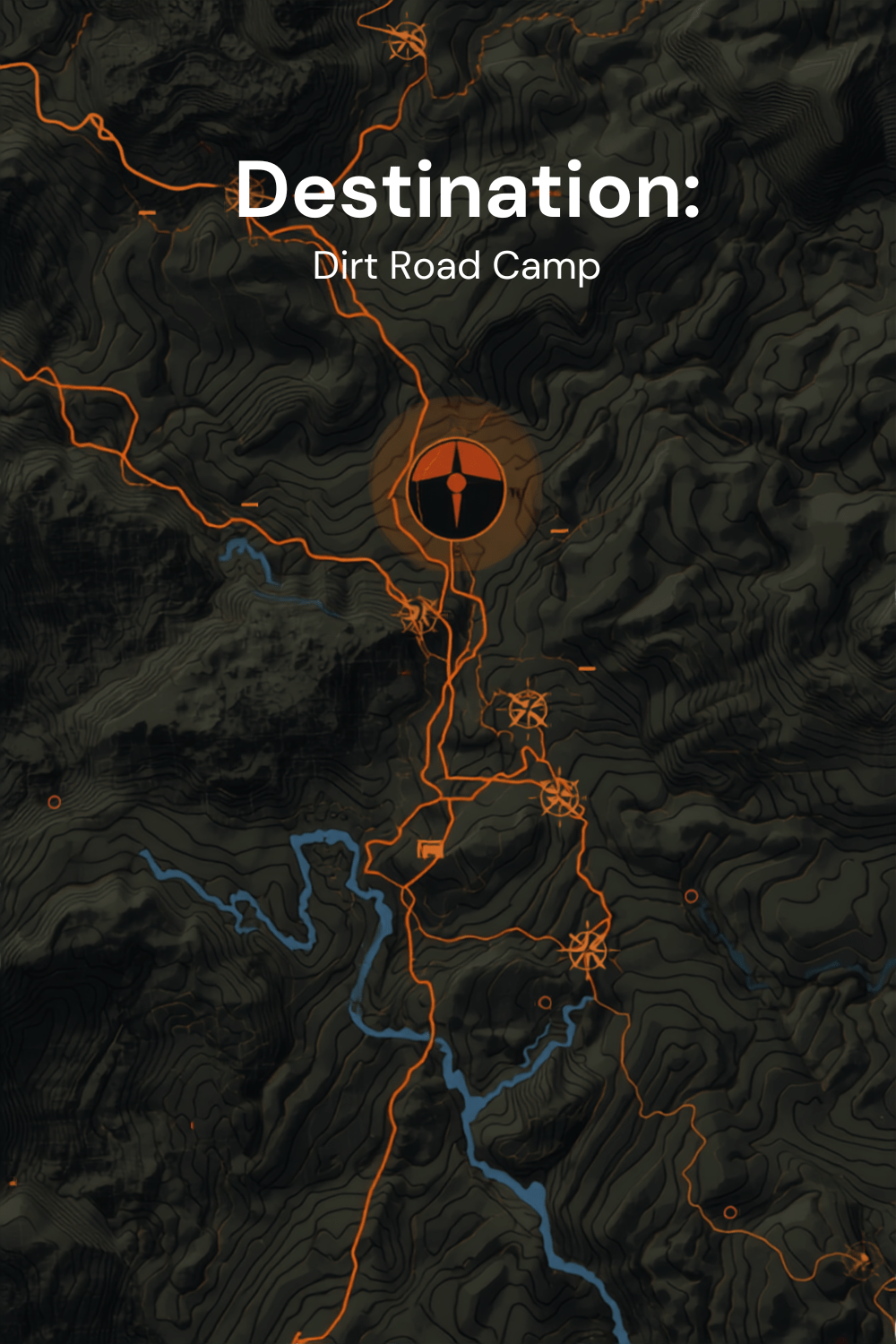
Navigation & Communication: Don’t Leave the Driveway Without These
Mobile service ends faster than most beginners expect. One minute you’ve got four bars, the next you’re in the forest or desert with a blank screen and a fork in the trail you didn’t plan for. Navigation and communication gear is what keeps a wrong turn from becoming a real problem.
Here’s what to pack, and why each piece earns its spot.
Offline Navigation
A GPS App With Downloaded Maps
Standard map apps assume you have signal. For overlanding, you want an app built for offline use — one that lets you download regional maps, trails, and public land boundaries before you lose service. Load your route the night before, not at the trailhead.
Double-check your download actually includes the area you’re headed to. “Downloaded maps” doesn’t always mean the whole state — check the coverage area before you leave.
A Dedicated GPS Unit (Optional but Worth It)
Phone apps are great until your phone dies, cracks, or overheats sitting on the dash. A dedicated GPS unit like the Garmin Overlander is built for off-road navigation specifically — topo maps, trail data, and a mount that isn’t your cupholder. Not required for your first trip, but a natural next purchase once you’re doing this regularly.
Paper Maps as Backup
Batteries die and electronics fail — a paper map or atlas of the region never does. Get one, know how to read it, and keep it in the vehicle even if you never plan to use it. It’s the recovery gear of navigation: you hope you never need it.
Staying in Touch Off-Grid
A Satellite Communicator
Once you’re out of cell range, a satellite communicator is the difference between “we’re fine, just delayed” and nobody knowing where to look for you. Devices like the Garmin inReach Mini 2 let you send texts, share your location, and trigger an SOS from literally anywhere on the planet, no cell signal required. (Note: it requires an active satellite subscription plan on top of the device cost.)
This is the one item on this list I’d call genuinely non-negotiable once you’re traveling somewhere remote enough to lose cell service for more than a few hours.
A Fully Charged Phone + Backup Power Bank
Obvious, but easy to get wrong. Bring a power bank with enough capacity to charge your phone multiple times, not just once — GPS apps and satellite communicators both drain batteries faster than normal use. The Anker 313 Power Bank is compact and holds several full phone charges.
Tell Someone Your Plan
Not gear, but it belongs on this list anyway: share your route and expected return time with someone who isn’t on the trip. It costs nothing and it’s the single most effective thing you can do to make sure help finds you if something goes wrong.
What You Can Skip For Now
You don’t need a full ham radio setup or a second dedicated GPS unit for your first few trips. A phone with offline maps, a paper backup, and — if you’re heading somewhere remote — a satellite communicator will cover the vast majority of beginner overlanding routes.
Building the Kit in Order
- Offline GPS app with downloaded maps
- Paper map or atlas
- Fully charged phone + power bank
- Satellite communicator (once you’re going remote)
- Dedicated GPS unit (once you’re doing this often)
Everything on this list is about the same thing: not depending on a single point of failure. Phone dies? You’ve got paper. Lost? You’ve got GPS. Truly stuck with no signal? You’ve got a way to call for help. That redundancy is the whole point.
Grab the full packing rundown — vehicle prep, recovery gear, camp setup, and navigation all in one printable — with our free Beginner Overland Rig Checklist.

 Dirt Road Camp
Leave a comment